
Imagine Golf: Score Better
TLDR, IncSports
4.891.00 Reviews
- Version
- 1.10
- Installs
- 50.00K
- Age Rating
- Everyone
Screenshots
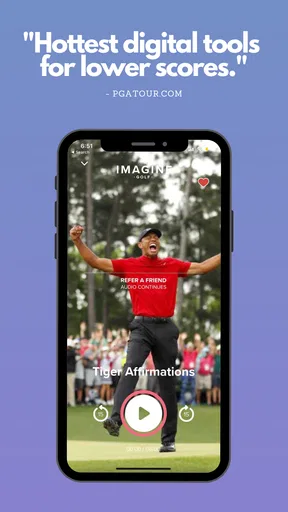
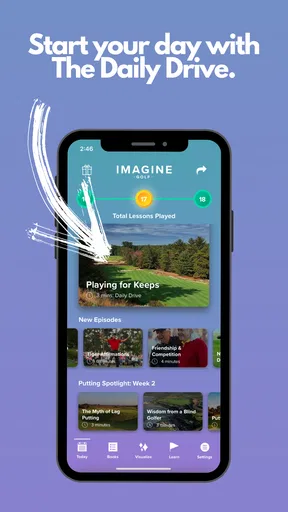
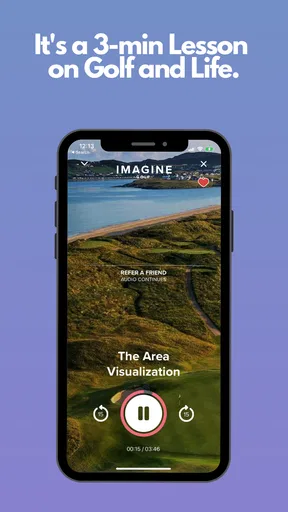
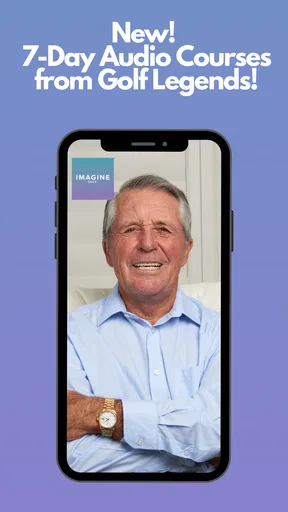
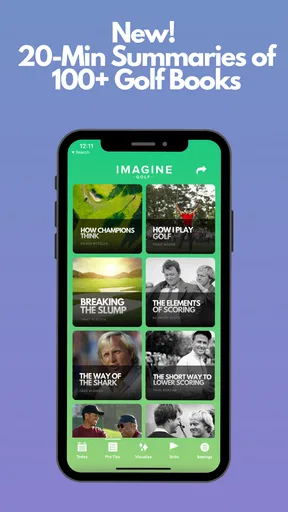

Our Review of Imagine Golf: Score Better
 Analysis by Appyee
I approached Imagine Golf: Score Better as a golfer would approach any mental-training tool: with curiosity, but also with a little skepticism. The promise is appealing because golf often turns on decisions, confidence, and recovery after mistakes rather than technique alone. A useful mental routine can change how a round feels, but an app cannot replace practice, coaching, or time on the course. My experience left me seeing this as a focused companion for golfers who want to work on the thinking side of the game in small, repeatable sessions.
It is a free sports app from TLDR, Inc., with optional purchases priced from $6.99 to $99.99 per item. The app is rated for Everyone, runs on Android devices using at least Android 5.0, and the current version is 1.10. Its average rating is 4.8 from over six hundred ratings, while more than fifty thousand people have installed it. Those figures suggest that it has found a real audience, although they do not by themselves tell me whether it will suit every golfer’s habits or expectations.
What the mental-game approach feels like in everyday use
I find the mental-game approach most useful when I treat it as a small part of my golf routine, not a rescue button for a bad round. A brief, regular check-in can help me notice what tends to unsettle my focus and choose one response to practice. That baseline makes it easier to decide which settings and habits are worth keeping simple.
A calmer alternative to chasing another swing tip
What makes this app different from a conventional golf utility is its emphasis. It is not primarily about club selection, scorekeeping, course maps, or swing mechanics. Instead, it asks me to think about the internal part of a round: preparation, attention, confidence, and the way I respond when a hole starts going badly.
That distinction matters because many golfers already have plenty of technical advice. They may watch a video about grip pressure before breakfast, adjust their stance on the range, and then lose focus after one poor drive. A mental-game app addresses the gap between knowing what to do and being able to stay committed when the situation becomes uncomfortable.
I found the concept most useful when treated as training rather than emergency motivation. Opening it immediately after a double bogey can help reset my thinking, but the stronger habit is using it before the round, when I am not already frustrated. A short session before leaving for the course can establish a simple intention: stay present, choose a target, accept the result, and move on.
Who will get the most from it
This is a good match for a golfer who understands the basics of the sport but struggles with consistency under pressure. It may help someone who starts confidently, then becomes tense after a mistake; someone who overthinks club selection; or someone who carries the previous hole into the next one. It can also suit a beginner who wants to build healthy routines before bad habits become deeply rooted.
I would be especially likely to recommend it to a recreational player who practices alone. A coach can observe behavior and challenge excuses in a way an app cannot, but an app is easier to reach every morning or before a casual round. That convenience makes the mental side feel less abstract.
It is less suitable for a golfer looking for detailed swing analysis, launch-monitor information, course strategy based on a specific layout, or a replacement for professional instruction. If the main problem is an inconsistent grip, poor contact, or a physical limitation, mental exercises will not solve the underlying issue. The app can help me manage my response to those problems, not diagnose them.
A realistic round-day routine
Imagine a Saturday round where I arrive early but feel distracted by work. Instead of immediately hitting balls without a plan, I could spend a few minutes with the app and choose one mental focus for the opening holes. The useful part is not trying to create perfect confidence. It is narrowing my attention to something I can actually control, such as committing to the shot routine and accepting the outcome.
After a poor opening hole, I would not use the app as a way to argue that the bad score did not matter. A better approach is to use its mental prompts as a boundary between holes. I can acknowledge the mistake, identify whether there is a practical lesson, and then stop replaying it. That is a small workflow, but it is more realistic than expecting a motivational message to transform my mood instantly.
For the same reason, I would avoid opening it repeatedly during every difficult moment. Constantly searching for reassurance can become another form of indecision. The best use is to establish a routine before play and return to it deliberately when I genuinely need a reset.
How it compares with familiar golf alternatives
Most golf apps focus on measurable or logistical tasks. A scorecard app records results, a GPS tool helps with distances, a swing app may provide technical feedback, and a video platform offers endless instruction. Those tools are often more practical during a round. Imagine Golf occupies a different space by helping me prepare mentally and interpret what happens afterward.
The trade-off is depth. A scorecard gives me a clear record that I can review later. A range session gives immediate physical feedback. A coach can tailor advice to my specific pattern. This app is more portable and less demanding, but its value depends on my willingness to reflect honestly and apply the ideas away from the screen.
I would use it alongside, not instead of, those alternatives. For example, a player could use a technical practice app to work on contact, then use this one to create a pre-shot routine and a post-mistake reset. That combination makes more sense than expecting either app to cover the whole game.
Trust starts with visible choices
When I review an app that touches personal habits and performance, I pay attention to the choices I can see rather than assuming anything about its privacy practices. The developer is TLDR, Inc., and the app is available at no upfront cost, with optional in-app purchases. That pricing structure means I would read each purchase screen carefully before confirming anything, particularly if I were testing the app casually.
The age rating of Everyone makes it approachable for a broad audience, but an age label is not a substitute for checking the controls presented on the device. I would look at the operating system’s permission prompts, notification settings, and subscription or purchase confirmation screens rather than granting access automatically. If a permission is not clearly connected to the way I intend to use the app, I would leave it disabled until I understand why it is requested.
This is also where expectations should remain sensible. A mental-training app may invite reflection about routines, confidence, or performance. I would avoid entering information that is more personal than necessary, especially if a simple note or general response is enough for the exercise. Keeping entries broad can reduce exposure while still allowing me to benefit from the habit.
Handling account and purchase decisions carefully
Before building a long-term routine, I would check how the app presents account access, restoration, and purchases on my device. I would want to know which actions are optional, whether I can continue using the free portion without buying anything, and how the operating system identifies a confirmed purchase. Those are practical checks, not signs that the app is untrustworthy.
The wide purchase range deserves attention. A low-cost item may be easy to justify for a short experiment, while a higher-priced option requires a clearer reason and a longer commitment. I would not buy simply because I had one disappointing round. A useful test is to use the free experience long enough to decide whether I am actually returning to the exercises and applying them on the course.
I would also keep control of notifications. Mental reminders can be helpful before a round, but they can become noise if they arrive at inconvenient times. Turning them off, limiting them, or allowing only the reminders that fit my schedule is part of making the app serve my routine rather than interrupt it.
Where the app needs a thoughtful user
The central limitation is that mental training is difficult to evaluate immediately. A good score after using the app does not prove that the app caused the improvement, and a poor score does not prove that it failed. Weather, course difficulty, sleep, playing partners, and physical form all affect a round. I would judge it by whether my decisions and recovery habits become more consistent over several rounds.
There is also a risk of turning reflection into overanalysis. Golfers who already spend too much time dissecting every shot may find that another stream of prompts adds pressure. In that case, the right approach is to choose one idea and stop. The app should simplify my mental routine, not give me another collection of rules to remember.
Another limitation is the distance between an app exercise and a real competitive moment. Reading or considering a prompt at home is not the same as standing over a three-foot putt to save a hole. I would make the transfer explicit by choosing one behavior to practice on the course: a breathing pause, a target commitment, or a defined reset after a mistake. Without that step, the experience can remain interesting but disconnected.
Three ways to make the experience more useful
- Use it before pressure arrives. A short pre-round session is more valuable when I am calm enough to decide what I want to practice. Waiting until frustration peaks makes the exercise harder to apply.
- Pair one mental goal with one observable action. “Be confident” is vague. “Pick the target, make one rehearsal, and swing without changing the decision” gives me something I can recognize during play.
- Review patterns instead of isolated scores. I would look for recurring situations, such as rushing after a bad tee shot or abandoning a plan after a missed putt, rather than judging the app by one round.
- Keep purchase pressure separate from performance pressure. I would test whether the habit fits my life before paying for additional content, and I would never treat a purchase as a guarantee of lower scores.
Who should skip it
I would skip this app if I wanted a complete digital caddie, a swing diagnostic system, or a detailed record of every shot. It is also not the right first choice for someone dealing with a clear technical fault who has not yet sought instruction. In that situation, time with a qualified coach or structured physical practice is likely to provide more direct value.
I would be cautious if I disliked self-guided exercises altogether. The app can offer structure, but I still have to engage with the ideas and carry them onto the course. Anyone expecting passive improvement from simply opening an app may find the experience underwhelming.
My cautious verdict
I see Imagine Golf: Score Better as a focused mental companion rather than a complete golf solution. Its strongest use is helping me turn vague frustration into a repeatable routine: prepare, commit, respond, and move on. That is a meaningful role, especially for recreational golfers whose scores are often damaged more by rushed decisions and emotional carryover than by a lack of information.
The free entry point makes it reasonable to try without treating the app as a major commitment, while the optional purchases mean I would stay alert at checkout and decide based on actual use. I would also review permissions, notifications, and account choices on my own device instead of assuming that a sports app needs broad access.
My recommendation is therefore measured but positive. If you want to work on the mental side of golf and are willing to practice the ideas away from the screen, this app is worth exploring. If you need technical diagnosis, live course data, or personal coaching, choose a more specialized tool. For me, its value is not that it promises a better score by itself; it is that it gives a golfer a practical place to rehearse the habits that make better decisions possible.
Verdict
Strengths of Imagine Golf: Score Better
- Simple score tracking keeps rounds quick and easy to record.
- Useful statistics help identify trends in your golf performance.
- Clean interface makes key round information easy to find.
- Supports goal setting to encourage more consistent practice.
- Convenient course and round history keeps past performance organized.
Limitations of Imagine Golf: Score Better
- Some advanced insights may require a paid subscription.
- Course data may be incomplete or outdated in certain regions.
- Requires accurate manual input for reliable statistics.
- Limited value for golfers who rarely track their rounds.
- Battery and location access may be needed for some features.
Similar Picks in This Category
View All
BeSoccer: Soccer Live Score
BeSoccer apps4.3

Cricbuzz - Live Cricket Scores
Cricbuzz.com3.7

NFL
NFL Enterprises LLC2.4

Da Fit
MO YOUNG LIMITED3.6

ESPN
Disney4.5

LiveScore: Live Sports Scores
LiveScore Limited4.5
Frequently Asked Questions
What is Imagine Golf: Score Better, and who is it designed for?
Imagine Golf: Score Better is a golf-focused app designed to help players improve their decision-making, course strategy, and mental approach to the game. Rather than acting only as a scorecard, it provides practical guidance intended for golfers who want to think more clearly during a round, manage pressure, and make smarter choices. It can be useful for beginners, recreational players, and experienced golfers looking for a more structured approach to improvement.
Can Imagine Golf: Score Better be used by beginners, or is it only for experienced golfers?
The app is suitable for beginners as well as more experienced players, although the value you get from it may depend on your current understanding of golf strategy. New golfers can use its guidance to learn better habits, such as choosing realistic targets and avoiding unnecessary risks. More advanced players may appreciate the mental and tactical reminders, especially when trying to become more consistent rather than simply hitting longer shots.
Does Imagine Golf: Score Better track scores and provide a complete digital scorecard?
Imagine Golf: Score Better is primarily focused on helping golfers improve their strategy and mindset, so users should not automatically assume that it replaces a full-featured golf GPS or tournament scorekeeping app. Depending on the version and available features, it may support tools related to recording or reviewing performance, but its main purpose is guidance and better decision-making. Check the current store listing before downloading if detailed score tracking is essential to you.
Does the app require an internet connection or access to a golf course?
The basic guidance and educational content may be available directly within the app, but some features can depend on how the application is implemented and updated. If you plan to use it while playing, it is sensible to open the app beforehand and confirm that the content you need is accessible without a reliable connection. It is also worth checking permissions, since a strategy app should not require unnecessary access to personal data or device functions.
Is Imagine Golf: Score Better free to download, and are there in-app purchases?
The download price, advertisements, subscriptions, and in-app purchase options can change over time and may differ between Android and iOS. Before installing, review the official store page carefully to see which features are included at no cost and whether advanced content requires payment. Users should also check subscription terms, renewal conditions, and cancellation instructions. This is particularly important if the app offers a free trial that automatically converts into a paid plan.
